LABE’s school-level cascade trainings helped teachers, school leaders, and community stakeholders identify gender-related challenges and develop practical actions to make schools more gender-responsive.
After district-level gender capacity-strengthening sessions in Koboko, Obongi and Gulu, LABE extended learning to schools and communities across seven districts: Koboko, Yumbe, Terego, Obongi, Adjumani, Gulu and Nwoya. The school-level cascade trainings brought together teachers, headteachers, School Management Committee (SMC) members, Parent-Teacher Association (PTA) representatives, local government officials and other education stakeholders to examine how gender norms and practices influenced children’s participation, learning and experiences in school.
The sessions encouraged participants to reflect on the relationship between gender, cultural values, decision-making, household responsibilities and educational outcomes, while identifying practical measures to address inequalities in their schools.
Identifying gender-related barriers to learning in Nwoya
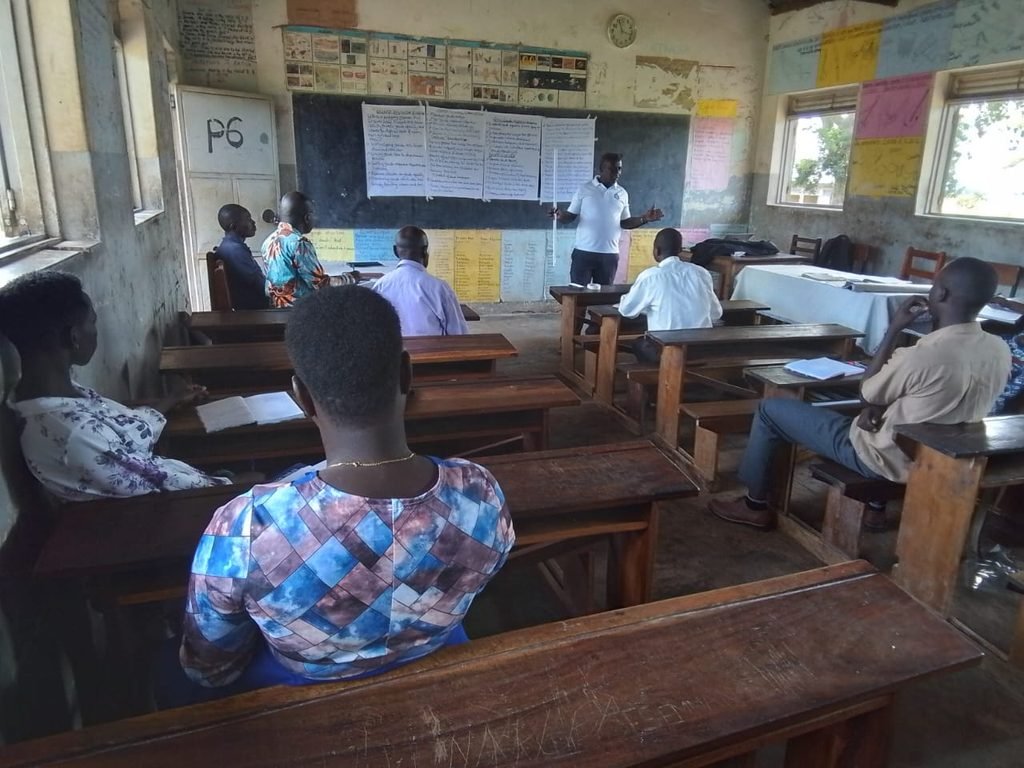
In Nwoya District, we conducted school-level trainings at Goma Central Primary School cluster on 16th October and Alokolum Primary School on 17th October 2026. The sessions brought together education stakeholders to examine gender-related challenges affecting learners and develop school-based actions.
Teachers and School Management Committee members appreciated the opportunity to deepen their understanding of gender responsiveness and gender transformation in schools. They developed school-based action points to guide the integration of gender considerations into planning and budgeting.
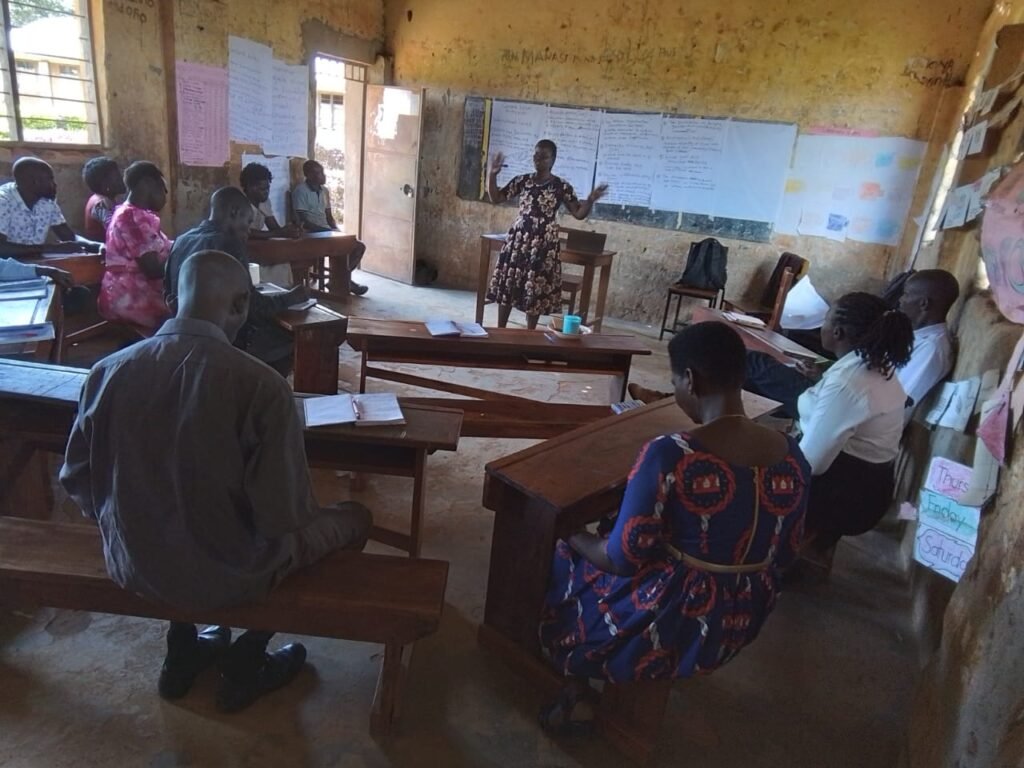
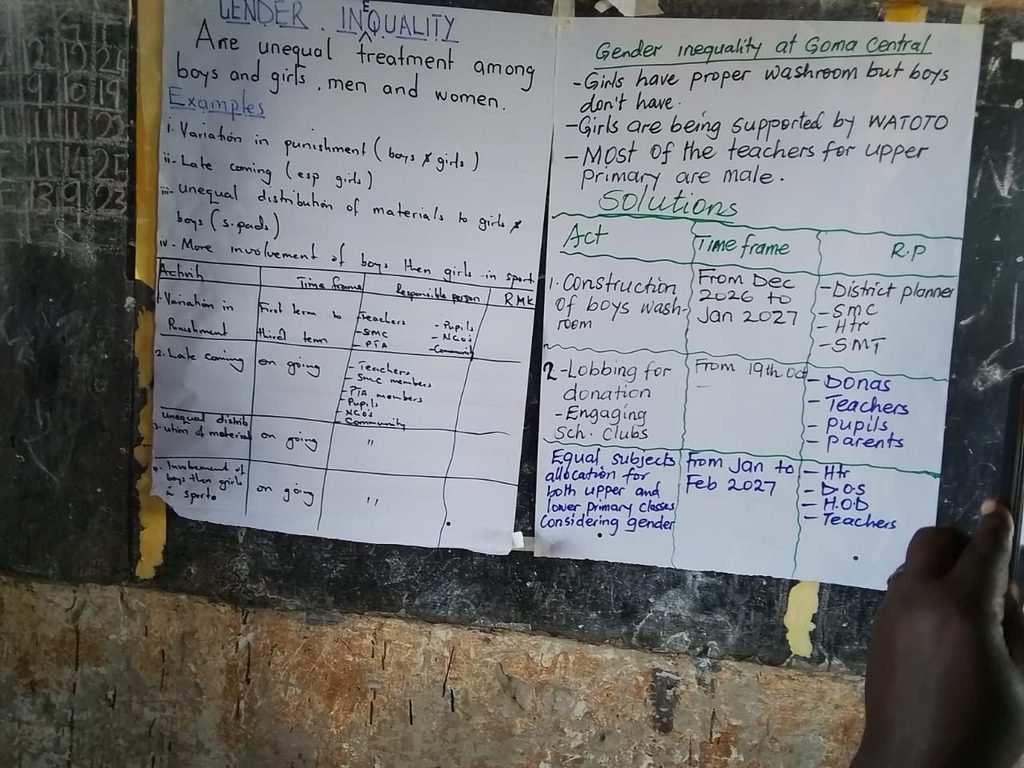
At Alokolum, participants explored how seasonal agricultural activities affected boys’ and girls’ school attendance differently. Discussions highlighted that boys were more affected during planting, while girls experienced increased absenteeism during weeding and harvest. Participants also identified poor academic performance among boys, urinary tract infections among girls, and attendance challenges faced by children from child-headed households.
These discussions connected gender analysis to the realities learners experienced at home, on farms, and in school. Participants developed an action plan that included community awareness activities, remedial lessons, guidance and counselling, health outreach, and parenting sessions to address the identified gaps.
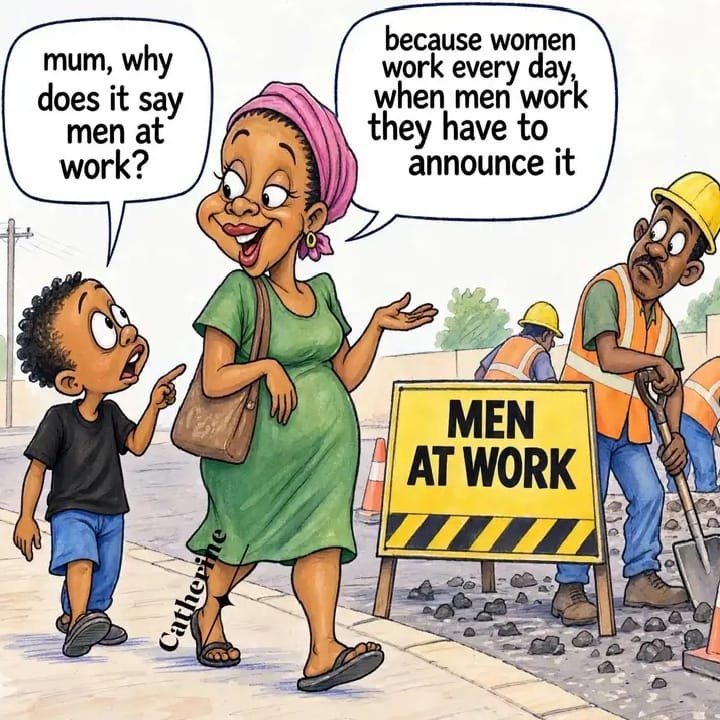
A cartoon titled “Men at Work” also prompted reflection on unpaid care and domestic work. Participants discussed how household chores, childcare, and farm work done by women and girls were often overlooked, and how the unequal distribution of responsibilities could affect children’s education.
Building awareness and challenging social norms in Yumbe
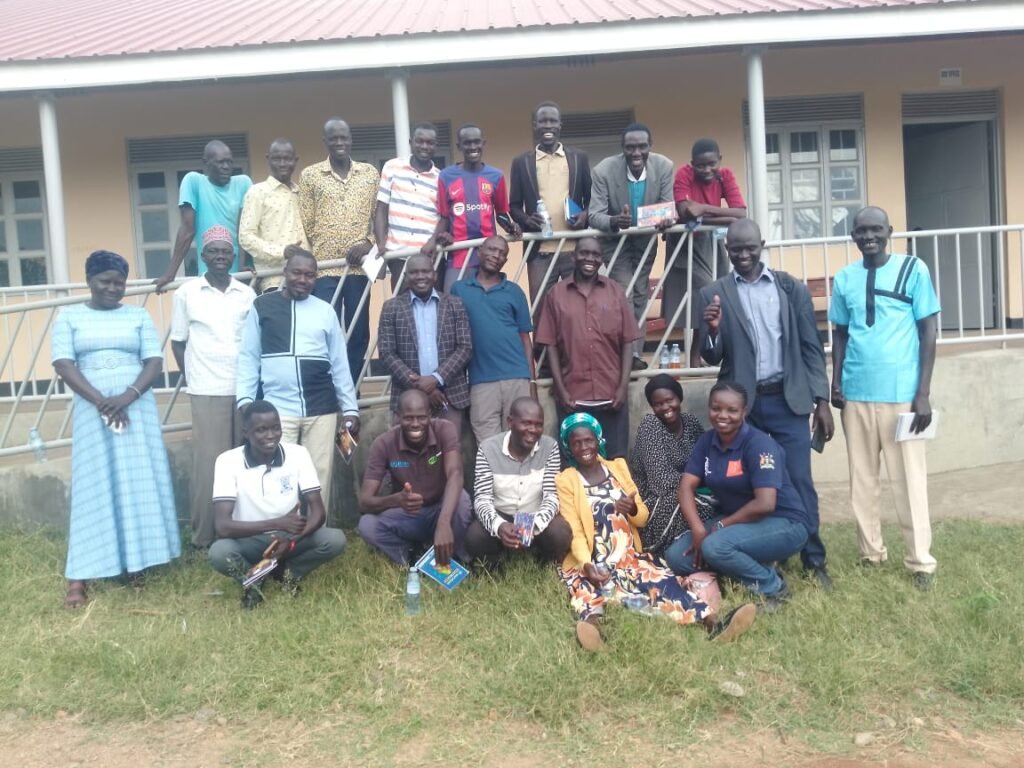
In Yumbe District, training sessions were held at the Rockland Primary School cluster in Zone 1, bringing together stakeholders from Locomgbo, Alpha and Rockland Primary Schools. Another session took place at Kulinga cluster in Zone 3, with Ujinga, Rimbe and Kulinga Primary Schools participating.
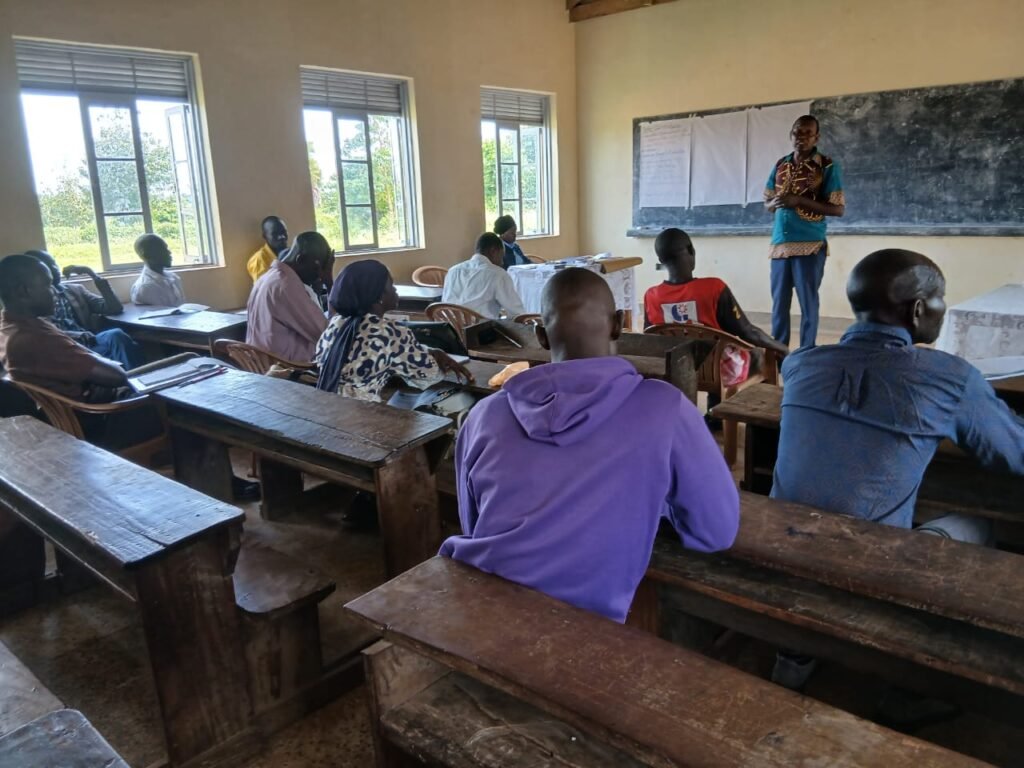
At Rockland, discussions focused on how social values and norms shaped everyday experiences, reinforced gender stereotypes, and contributed to inequalities. Participants reflected on how society shaped attitudes and practices often regarded as normal and how these attitudes and practices could be reconsidered.
The training was particularly meaningful for participants who had not previously attended structured gender training specifically targeting school stakeholders. They welcomed the opportunity to identify gaps and consider how they could apply the lessons in their schools, homes and communities.
Obitre Margaret, Headteacher of Locombgo Primary School in Zone 1, Yumbe, appreciated LABE’s support and called for more time to deepen the discussions.
“I want to thank LABE for bringing us this workshop to our area, and the two facilitators, Ayikoru Joyce and Ismail, for taking us through. We have loved the training so much, and I know that, through this training, we are going to fulfil the gaps that we have identified. But one thing I want to note is that next time, the training should take three days to enable us identify more gaps and do better in our schools.”
The sessions helped school stakeholders connect gender concepts to practical school-level challenges and consider how to promote more inclusive learning environments.
Strengthening gender-responsive practices in Koboko
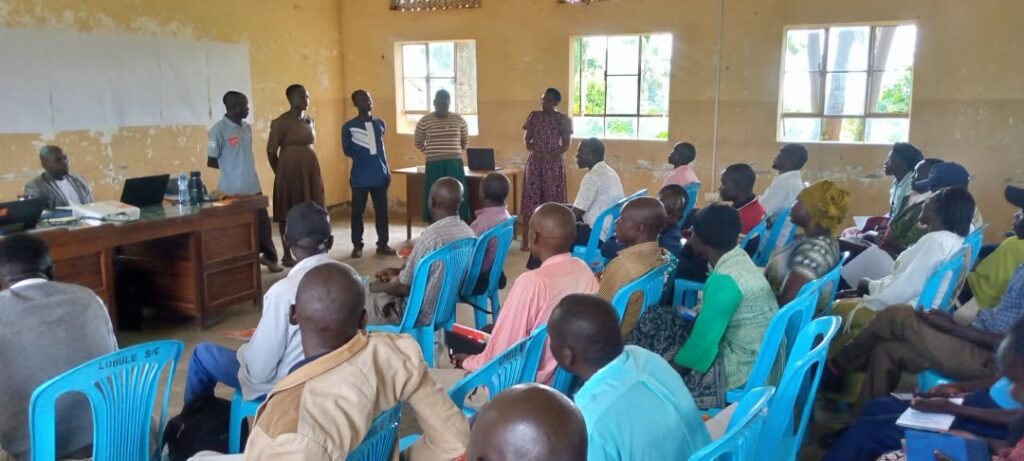
In Koboko District, school-level training took place on 24th October 2026 at Keri cluster and Lobule Subcounty headquarters. Participants included teachers, headteachers, school managers, PTA representatives, SMC chairpersons, and subcounty officials.
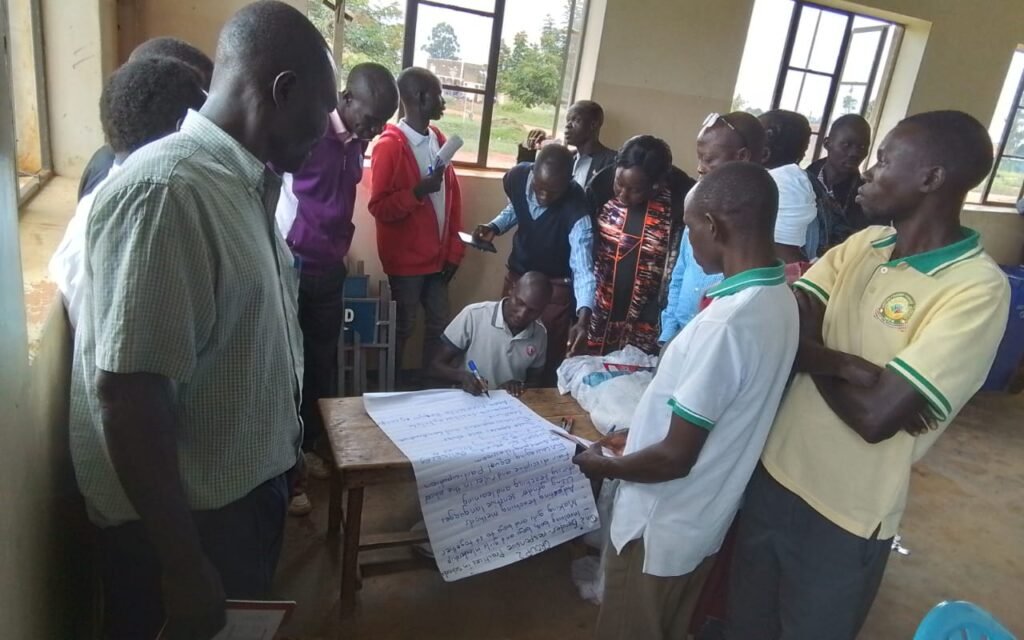
At Keri cluster, discussions focused on gender-transformative practices that schools could promote. A parish priest from Kuluba Church of Uganda, who also taught at Kuluba Primary School, contributed to the discussions on practices that could support gender transformation in schools. Participants reflected on how school administration and everyday practices could become more gender-responsive.
At Lobule, participants examined how cultural norms and societal values shape gender attitudes and decision-making in schools and communities. They also reflected on how attitudes can shift gradually through awareness, dialogue, and deliberate action.
The Subcounty Chief of Lobule appreciated LABE’s support to government efforts to strengthen awareness and address attitudes that contributed to gender inequality.
Extending the learning across seven districts
The school-level cascade trainings also took place in Terego, Obongi, Adjumani and Gulu, building on the district-level capacity-strengthening sessions completed earlier in October.
In Terego, the District Health Officer, District Education Officer, gender focal person, and district planner facilitated training involving teachers, parish chiefs, SMC and PTA representatives, and subcounty leaders. District officials’ involvement helped link gender awareness to the planning and service delivery in schools and communities.
Across the seven districts, the cascade approach gave school stakeholders opportunities to examine gender-related challenges in their own settings and identify actions to promote more inclusive learning environments.
Turning learning into action
A key part of the training process was helping participants identify specific gender-related gaps and agree on actions to address them. These included proposed measures to improve school attendance, support learners facing barriers to participation, strengthen guidance and counselling, engage parents and communities, and integrate gender considerations into school planning and budgeting.
By involving teachers, school leaders, parents, community representatives and local government officials, LABE supported shared responsibility for creating more inclusive learning environments.
The school-level cascade trainings built on LABE’s commitment to working with families, schools and communities to strengthen learning and promote children’s wellbeing. The action points developed during the sessions provided a basis for follow-up and for applying the lessons in school and community settings.
Growing Recognition and Community Interest in Gulu
The impact of the school-based gender training is beginning to extend beyond schools. At the Owalo Subcounty Budget Conference held on 30th October 2026, the Community Development Officer publicly acknowledged LABE’s contribution to training local stakeholders on gender issues. The conference report also recognised LABE alongside other development partners, reflecting growing appreciation of the importance of gender-responsive interventions in promoting inclusive education.
The conference also created an opportunity to strengthen community engagement around Home Learning Centres. Following a presentation on Home-Based Early Childhood Development, four community members expressed interest in learning more about the HLC model and committed to contacting LABE for further information and support.