In Obongi District, parents at Asamvu Home Learning Centre are transforming locally available materials into outdoor play resources, creating more opportunities for children to learn through play while strengthening community ownership of early childhood learning.
More than 80 million children aged 2–4 years globally (approximately one in five) do not play regularly with their caregivers at home, while over 90 million children under five (about one in seven) have no playthings at home, according to UNICEF’s 2026 global data on play. These figures highlight the importance of making play opportunities and materials more accessible to young children, including through the use of simple, locally available resources.
UNICEF Uganda recognises play as an important part of early childhood development, noting that both structured and unstructured play help children build knowledge, curiosity and confidence, while developing language, thinking, planning and decision-making skills.
At LABE-supported Asamvu Home Learning Centre (HLC) in Obongi District, parents are putting this into practice by actively participating in making outdoor play materials using resources readily available in their community.
In September 2026, the Asamvu Home Learning Centre Management Committee (HLCMC) and parents participated fully in making the outdoor play materials. Demonstrating commitment to the activity, the committee purchased some of the locally available materials used during the activity.
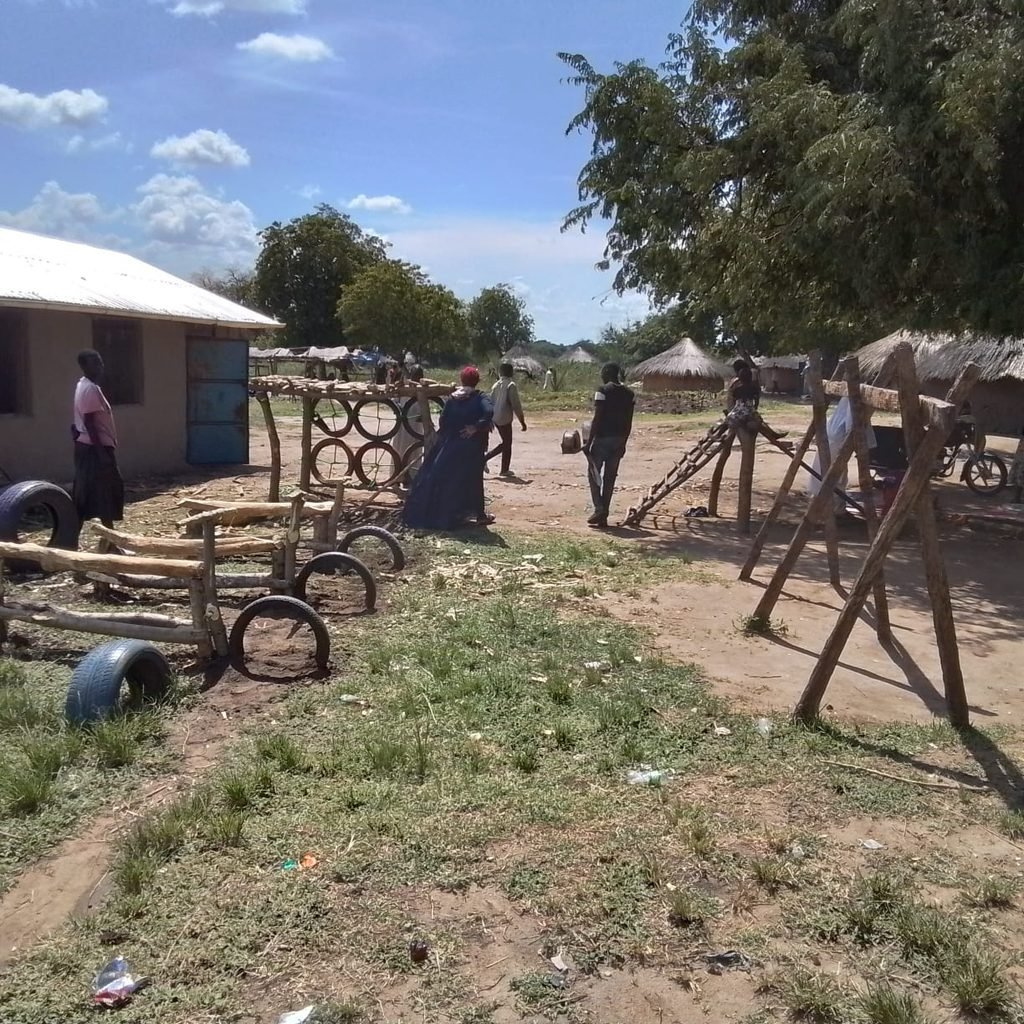
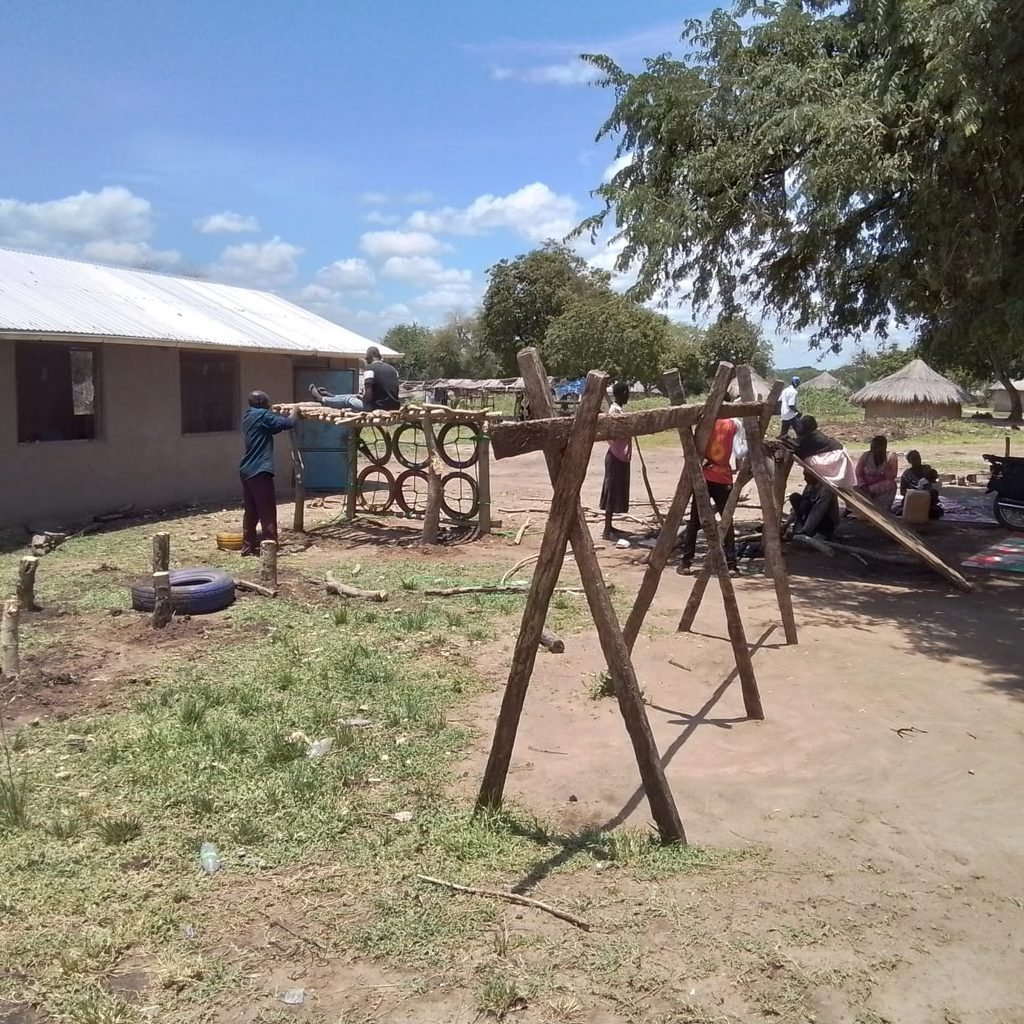
Through strong community mobilisation by the HLCMC, parents participated successfully. Beyond making the materials, community members have shown strong ownership by pledging to secure the completed play materials.
Parents are already appreciating the benefits of the outdoor play materials. They report that the materials have encouraged children to spend more time at the HLC, even when there are no scheduled learning sessions. This has also given parents more time to attend to household responsibilities.
The HLC Chairperson highlighted the practical and financial benefits of using locally available materials, particularly the reduced costs of making and maintaining the play resources.
“By using the locally available materials, our work is made easy, and we spend less on making the outdoor materials. Repairing them is also easy”, the Chairperson says.
Eimani Scovia, a parent at Asamvu HLC, also shares how the outdoor play materials have influenced her children’s routine, giving her more time to carry out domestic work.
“The outdoor play materials have made my children always be at the HLC, enabling me to continue with my domestic work,” she remarks.
For Aziku Gift, another parent, participating in making the play materials has provided a deeper understanding of the importance of play in children’s learning. He notes that involving parents in the process has helped them appreciate the role of play in early childhood development.
The parents commend LABE for the initiative and support in making outdoor play materials using locally available resources.
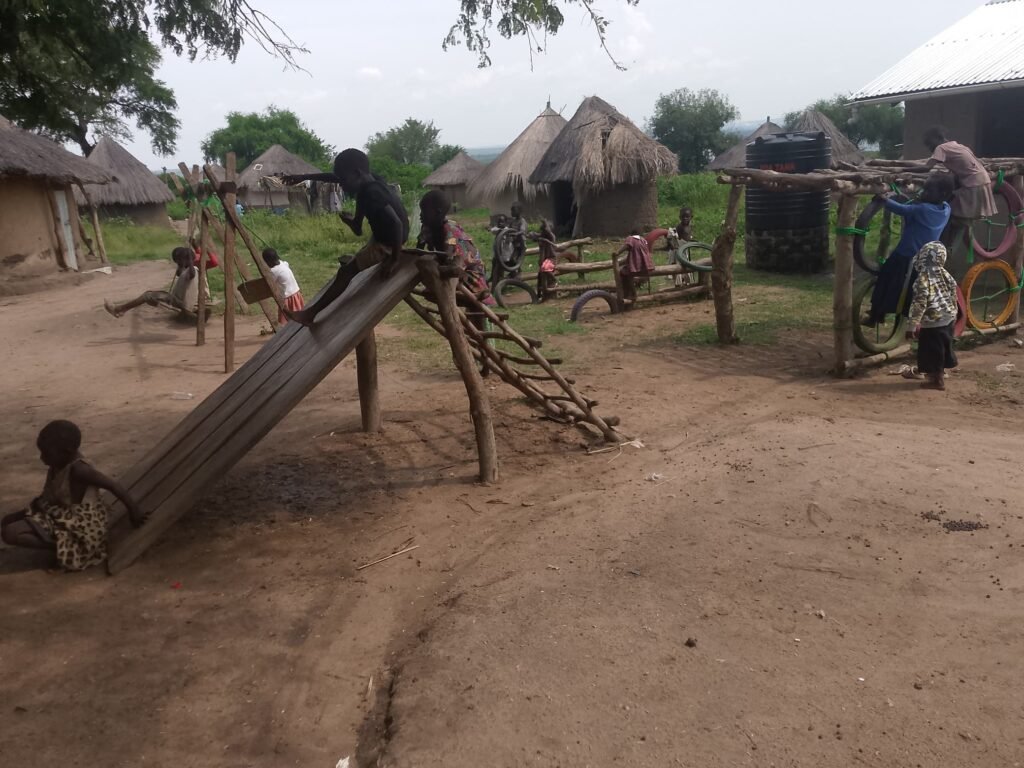
The experience at Asamvu HLC shows how community participation can create engaging and sustainable learning environments for young children. By mobilising parents, using resources within their reach and encouraging collective responsibility, the Centre shows that supporting children’s learning through play does not always require expensive, commercially produced materials. It begins with communities recognising the value of play and taking an active role in making it possible.