Through collective effort, local resource mobilisation and active parental involvement, the community at Ichikiti Home Learning Centre in Yumbe District is transforming its learning environment, demonstrating what strong community ownership can achieve.
A good early learning environment is about more than the activities children take part in. The physical appearance, organisation and facilities also help create a welcoming, stimulating space where children can learn, play and develop.
At Ichikiti Home Learning Centre (HLC), Zone 1, parents are taking practical steps to improve their centre by constructing a veranda and renovating and constructing outdoor play facilities.
These improvements are driven by community participation, with parents contributing their time, skills, materials and other resources to make the centre a better place for their children.
Creating more opportunities for children to learn through play
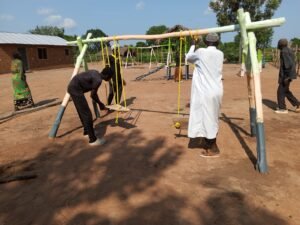
to construct outdoor play facilities for children
Play is essential to early childhood development. Through play, children explore their surroundings, develop creativity, build relationships and strengthen their physical, social, communication and problem-solving skills.
The World Health Organization (WHO) Guidelines on Physical Activity, Sedentary Behaviour and Sleep for Children under 5 Years of Age recommend that children aged 1–4 years engage in at least 180 minutes of physical activity daily, spread throughout the day. This includes opportunities for active play, movement and exploration.
Recognising the importance of play, parents at Ichikiti HLC are renovating and constructing outdoor play facilities using locally available materials. Their creativity and resourcefulness show that stimulating play environments do not always require expensive equipment. Communities can make meaningful improvements by identifying and using the resources within their reach.
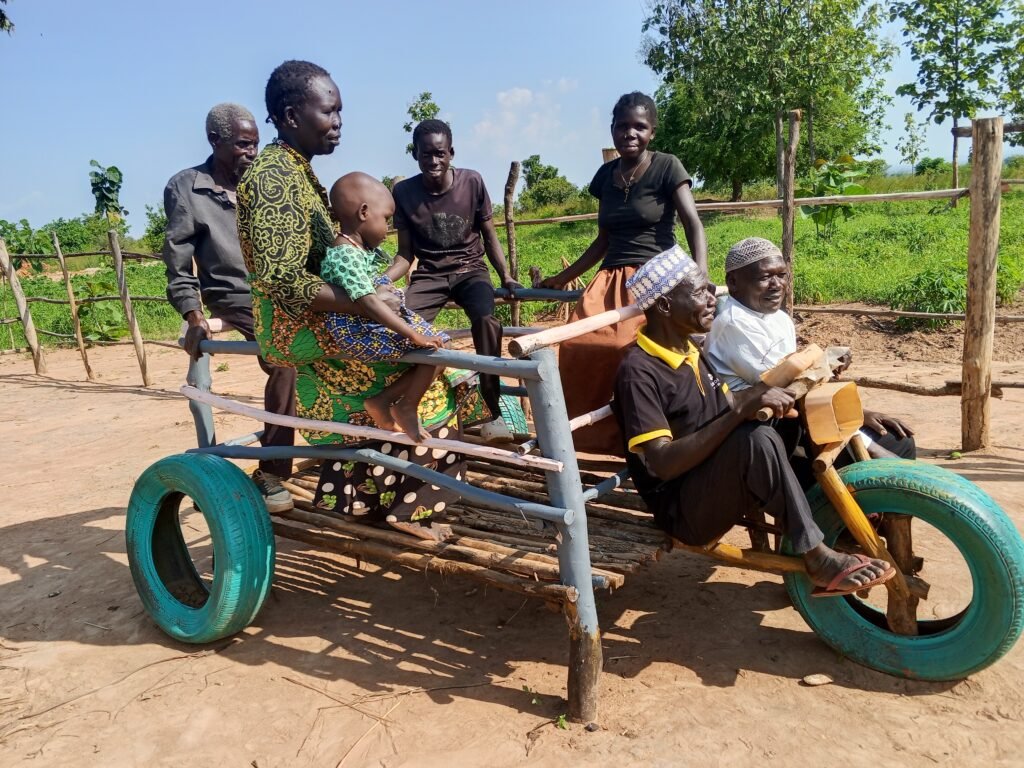
From CMC training to community action
The ongoing construction of the veranda at Ichikiti HLC is another example of how community capacity strengthening can translate into practical improvements.
After the Centre Management Committee (CMC) training and subsequent follow-up meetings conducted by LABE Programme Officers, the committees mobilised resources through the two HLC Village Savings and Loan Association (VSLA) groups.
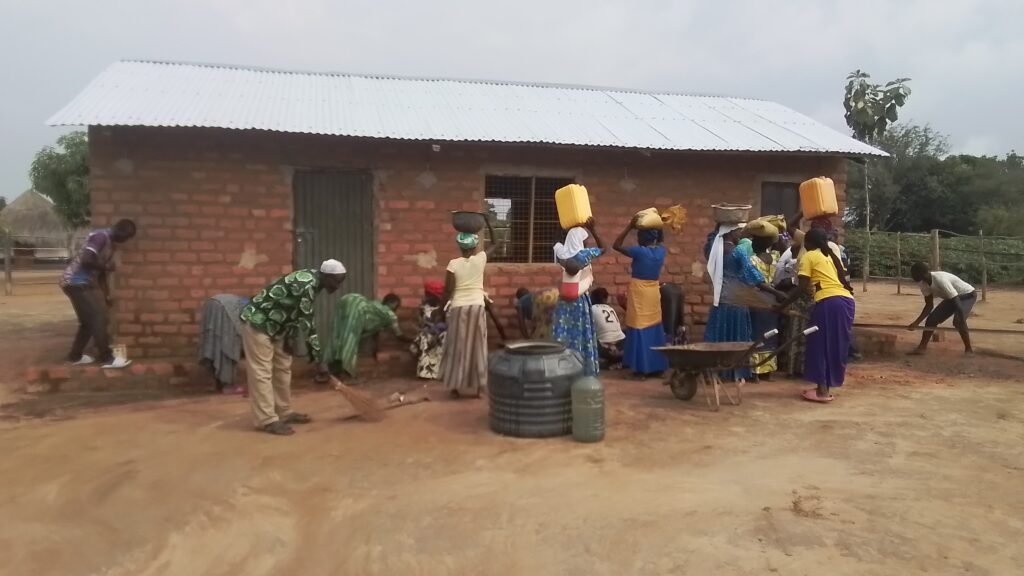
Both groups contributed funds and purchased one bag of cement. They also mobilised two trips of river sand to support the construction work.
This collective contribution demonstrates the value of strengthening CMCs in governance, resource mobilisation and centre management. It also shows how VSLA groups can contribute beyond household savings and loans to support shared community priorities.
A community taking ownership
Perhaps the most encouraging aspect of the construction process is the level of parental participation.
Men in the groups have actively and willingly contributed their labour to improving the centre. Their involvement has added momentum to the process and demonstrated the value of engaging men in supporting community learning spaces.
Women have also played an important role, including fetching water and carrying river sand from the source to the construction site on their heads. Parents have also voluntarily contributed food to feed those involved in the construction work.
These contributions, whether in materials, labour, food or time, reflect a shared commitment to improving the centre. They also show that community ownership is not simply about attending meetings or making decisions; it is about taking collective responsibility and contributing towards agreed priorities.
Building on the progress
With the inside wall already plastered, the next step is to plaster the outside wall as veranda construction progresses.
The improvements at Ichikiti HLC demonstrate how investing in the capacity of community management structures can encourage local resource mobilisation and collective action. What began with training and follow-up support is translating into visible improvements, backed by parents who are willing to contribute what they can.
Through its Family Basic Education (FABE) approach, LABE recognises families and communities as important partners in creating and sustaining quality learning environments for children.
The experience at Ichikiti reminds us that sustainable community improvements are built not only through external support, but also through the commitment, participation, and resources that communities themselves bring.
As the Ichikiti HLC community continues with the improvements, its efforts offer a practical example of what can happen when empowered management committees and committed parents work together toward a shared vision.
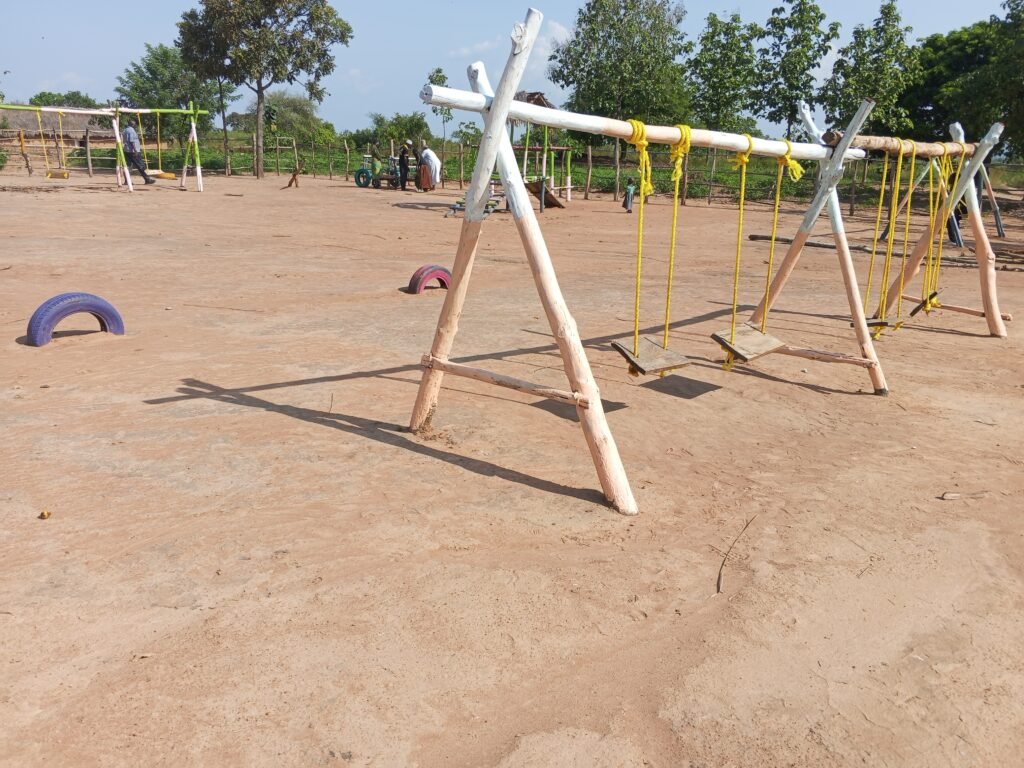
Read more about LABE’s VSLA+ initiative here.