When Munguci was born on 21st January 2026 at Oriajini Hospital in Terego District, her mother, 22-year-old Letasi Viola, faced an unexpected challenge. Health workers diagnosed the newborn with spina bifida and clubfoot affecting both feet, conditions that required specialised medical attention.
For Letasi, a resident of Kimiru B Village in Katrini Sub-county, Terego District, accessing the recommended treatment seemed beyond reach. Health workers had referred Munguci to CURE Hospital in Mbale for surgery, but the family lacked the financial resources to meet the associated costs.
The family was already struggling financially following the death of Letasi’s father, its main breadwinner, in October 2025. Much of their limited resources had been spent on his funeral. Letasi, the fourth of eight children, comes from a family that depends on subsistence farming for its livelihood.
Her circumstances became even more difficult when Munguci’s father withdrew his support after learning of the child’s disability. Letasi sought assistance from his family, but they too relied on subsistence farming and were unable to help financially. Left to care for her daughter with limited resources, she could not access the recommended treatment.
Globally, UNICEF estimates that nearly 240 million children live with disabilities, many of whom face significant barriers to education, healthcare, and other essential services. In low- and middle-income settings, estimates suggest that approximately half of children with disabilities are out of school, underscoring the inequalities that continue to limit their access to learning opportunities.
In Terego District, Literacy and Adult Basic Education (LABE) is working to address some of these barriers through the Building Effective Networks (BEN) – Inclusive Learning for Children with Disabilities (ILCwDs) Project, implemented with support from Liliane Fonds. The project strengthens access to inclusive early childhood education through community-based Home Learning Centres, combining early learning support, community sensitisation, caregiver training and rehabilitation services to improve the well-being and participation of children with disabilities.
For Munguci and her mother, this intervention opened a pathway to specialised medical care that had previously seemed beyond reach.
As part of the project, LABE organised a diagnostic camp in May 2026 to identify children with disabilities and connect them to appropriate medical and rehabilitation services. When Letasi’s mother heard about the camp from friends, she encouraged her daughter to take Munguci for assessment.
On 28th May 2026, accompanied by her mother, Letasi brought Munguci to the diagnostic camp at Ejiovu Home Learning Centre. The medical team confirmed that the child had spina bifida and clubfoot affecting both feet. They recommended a phased treatment plan, beginning with surgery for spina bifida at CURE Hospital in Mbale, as the condition had already led to hydrocephalus. Treatment for the clubfoot would follow at Arua Regional Referral Hospital.
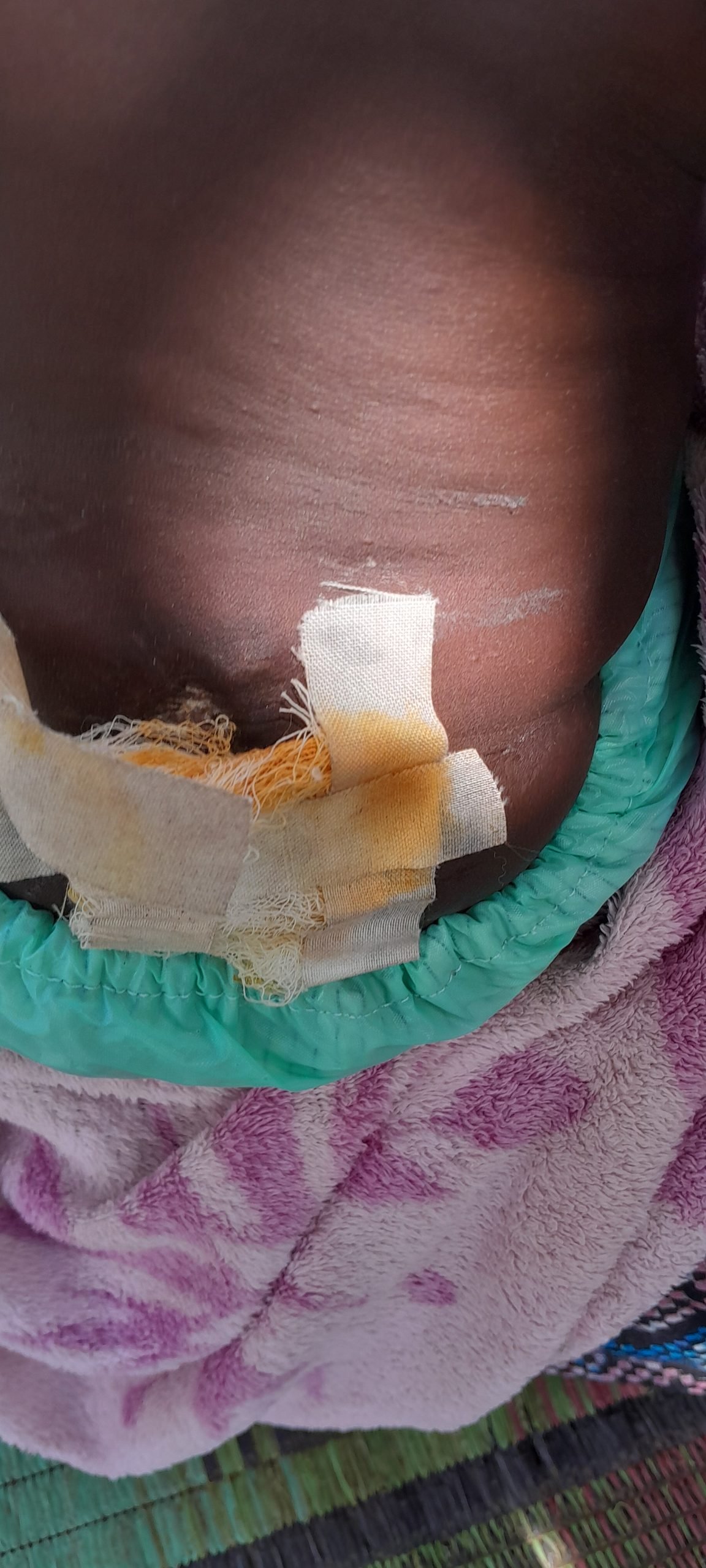
With LABE’s support, Letasi and Munguci travelled to Mbale on 27th June 2026. Munguci successfully underwent two surgical procedures on 8th and 16th July and was discharged on 18th July 2026. A follow-up appointment was scheduled for 18th August to assess her recovery before proceeding with treatment for her feet.
During the review at CURE Hospital, the medical team removed Munguci’s stitches and confirmed that her surgical wound had healed completely, clearing the way for the next phase of treatment.
Letasi and Munguci subsequently travelled to Arua Regional Referral Hospital, where the child was reassessed for the planned clubfoot surgery. Following the assessment, doctors recommended corrective casting rather than immediate surgery. Munguci was also provided with a cerebral palsy (CP) chair to support her positioning and care. However, the assessment revealed that her left leg was more severely affected and might still require corrective surgery.
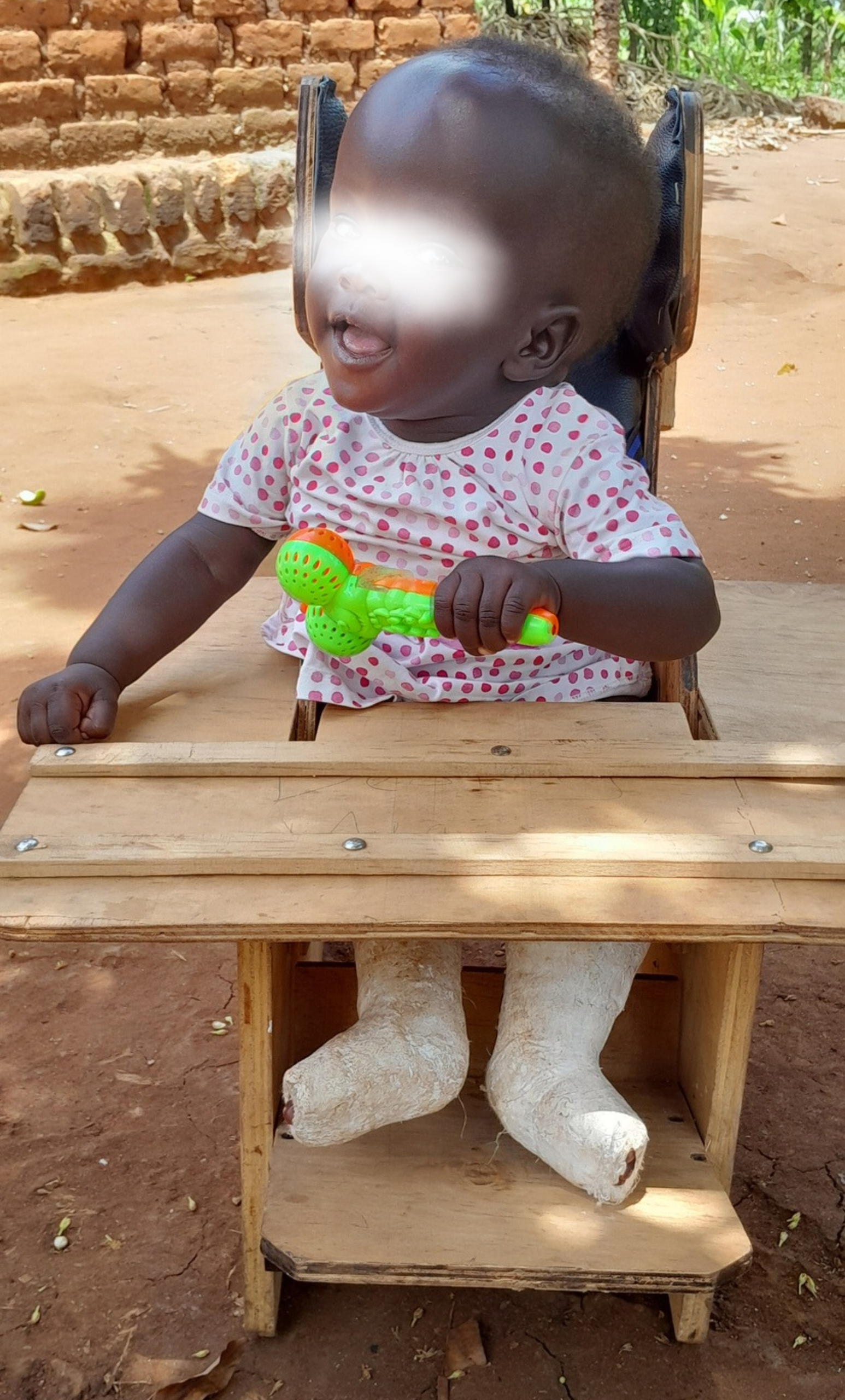
Her next medical review is scheduled for 11th November 2026 at Gulu Regional Referral Hospital.
For Letasi, the journey that once seemed impossible has become a source of renewed hope. Through the BEN Project, LABE has helped Munguci access specialised medical care that was previously beyond the family’s reach. Although her treatment is still ongoing, the successful surgeries and continued medical follow-up represent significant progress towards improving her health and well-being.
Munguci’s story highlights the importance of connecting children with disabilities and their families to timely medical care and rehabilitation services. It also demonstrates how community-based interventions, such as those supported through LABE’s Home Learning Centres, can help identify children in need, address barriers to essential services and promote their inclusion and well-being.